
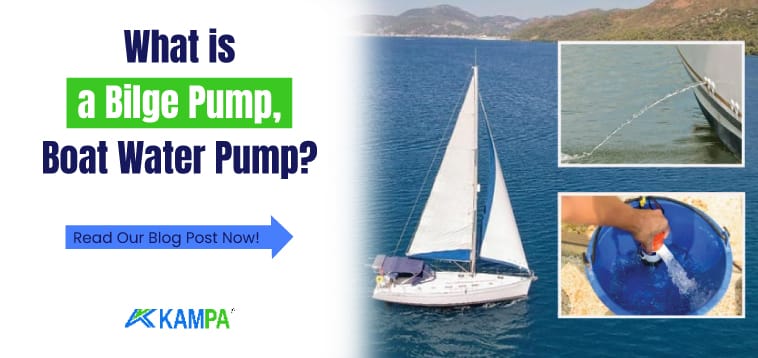
What is a Bilge Pump, Boat Water Pump?
Bilge pumps are pumps used for the discharge of water and oil collected in transportation vehicles such as ships, boats and yachts.
The bilge is the lowest part of the ship. Oil and water leaking from ships is collected in this area.
The bilge pump plays a vital role in the operation of ships, both in daily use and in emergencies.

After cleaning or repairs in the engine room, water or other liquids enter the bilge wells. These wells are then emptied with the help of a bilge.
A marine bilge pump is an essential safety feature on any vessel, designed to remove excess water from the bilge and keep your boat afloat when subjected to severe water ingress.
It is primarily designed to relieve water shortages. That is why it is important that it always works correctly.
A pump on board a ship is usually either a reciprocating type or a centrifugal type. The flow rate provided by the reciprocating type is less than that of the centrifugal type.

All bilge pumps generally used on ships are located below sea level. It should be preferred according to the size of your ship. You can contact us to find the appropriate product.
Bilge Pump Operation
The liquid enters the pump at the center of the impeller, also known as the eye of the impeller. Once in, the liquid flows out radially and enters the blades of the impeller. The speed of the liquid increases due to the rotation of the propeller.
Maintaining a boat requires understanding various systems, and a critical one is the bilge system. The bilge of a boat refers to the lowest internal part of the hull, where water tends to collect. This water, known as bilge water, can come from various sources such as rain, waves, leaks, or condensation. Therefore, effectively managing the bilge on a boat is crucial for safety and preventing damage.
The primary tool for managing bilge water is the bilge pump. A bilge pump boat utilizes is designed to remove this accumulated water. There are various bilge pump types available, each with its own advantages and disadvantages. Understanding how do bilge pumps work is essential for boat owners. A bilge pump in ship or on a smaller vessel operates by drawing water from the bilge and expelling it overboard. The purpose of bilge pump is simple: to prevent the boat from becoming waterlogged and potentially sinking. The process of bilge pumping involves using the pump to remove the water, and a bilge pumping system can be automated with float switches that activate the pump when a certain water level is reached. Whether you need a simple boat pump or a more sophisticated bilge water pump, ensuring you have a reliable system is paramount. Even on a large bilge pump ship, the basic principles of removing water from the bilge on boat remain the same, making the bilge a vital area to monitor.
This high-velocity liquid then enters the diffuser or convolute casing where the kinetic energy of the liquid is converted into pressure. This pressurized liquid is pumped out through the pump discharge. Many centrifugal pumps have multiple impellers for increased speed.
- Before starting the pump, open the suction valve and close the discharge valve.
- Start the preparation unit on the suction line
- Start engine
- Have a clock in the priming process (It will start when you start the pump)
- After the priming process is complete, slowly open the drain valve, turn it.
- Adjust the flow rate with the help of the suction valve.
- Maintain the desired outlet flow by adjusting the relief valve
- When stopping, stop the engine first and then close the discharge and suction valve.
Top brands like Kent, Leo, Sumak, Limk produce manual and automatic bilge pumps. We also carry float switches, strainers, panel switches, if you are looking for a new or larger boat bilge pump, shop now at Kampa Company and save!
If you are curious about the working logic of water pumps, continue.
We look forward to your comments if you found it useful!